Nerve Growth Factor

After seven years of challenging research, Dompé successfully engineered and manufactured the first recombinant human Nerve Growth Factor (rhNGF)

Dompé’s team manufactured Oxervate®, the first topical biologic FDA-approved treatment for neurotrophic keratitis. Neurotrophic keratitis is a rare, degenerative corneal disease marked by loss of corneal sensitivity, which if left untreated can lead to corneal epithelium breakdown and even corneal perforation.

What is Nerve Growth Factor?

Nerve Growth Factor (NGF) was discovered by the Italian neurobiologist, Professor Rita Levi-Montalcini, and her colleague Dr. Stanley Cohen. For this discovery, they were awarded the Nobel Prize in Physiology or Medicine in 1986. Nerve Growth Factor (NGF) is an endogenous protein involved in the differentiation and maintenance of neurons. In their research, Drs. Levi-Montalcini and Cohen uncovered that NGF plays a crucial role in the proliferation, differentiation and survival of sympathetic and sensory neurons.

Dompé Sets Out on a Journey to Bring NGF to Patients

At Dompé, our goal is to improve the lives of patients living with challenging conditions. We strive to focus on areas of unmet medical need. 2010 was a momentous year when Dompé acquired the rights to produce and market NGF.  Following several years of research, our committed team of scientists developed cenegermin-bkbj, a recombinant human Nerve Growth Factor (rhNGF). Cenegermin-bkbj is produced using an innovative biotechnological process in which genetic material comprised of sequences coding for NGF is transformed into bacteria. These bacteria then produce a recombinant protein, which is structurally identical to the NGF protein naturally produced by the human body.

Our Achievement: Developing NGF into a Treatment for a Rare Corneal Disease

Neurotrophic keratitis, a hard to manage disease, had no FDA-approved treatments available for patients; thus, we embarked on a clinical development path to create cenegermin-bkbj to fill this need. The cornea is a transparent, highly innervated tissue, devoid of blood vessels and with a highly organized collagenous matrix to ensure optical transparency for clear vision.

Corneal health and trophism relies in part on innervation. Sensory corneal nerves provide trophic support to the corneal epithelium while facilitating and maintaining ocular surface homeostasis. Alteration in the morphology and function of these corneal nerves disrupts the fine balance needed for corneal integrity and health of the cornea. In a disease like NK, the corneal nerves and corneal epithelium are compromised. Even though most patients with NK may not complain of symptoms due to reduced corneal sensitivity, they suffer from corneal epithelial breakdown, which when left untreated, can lead to further deterioration over time.
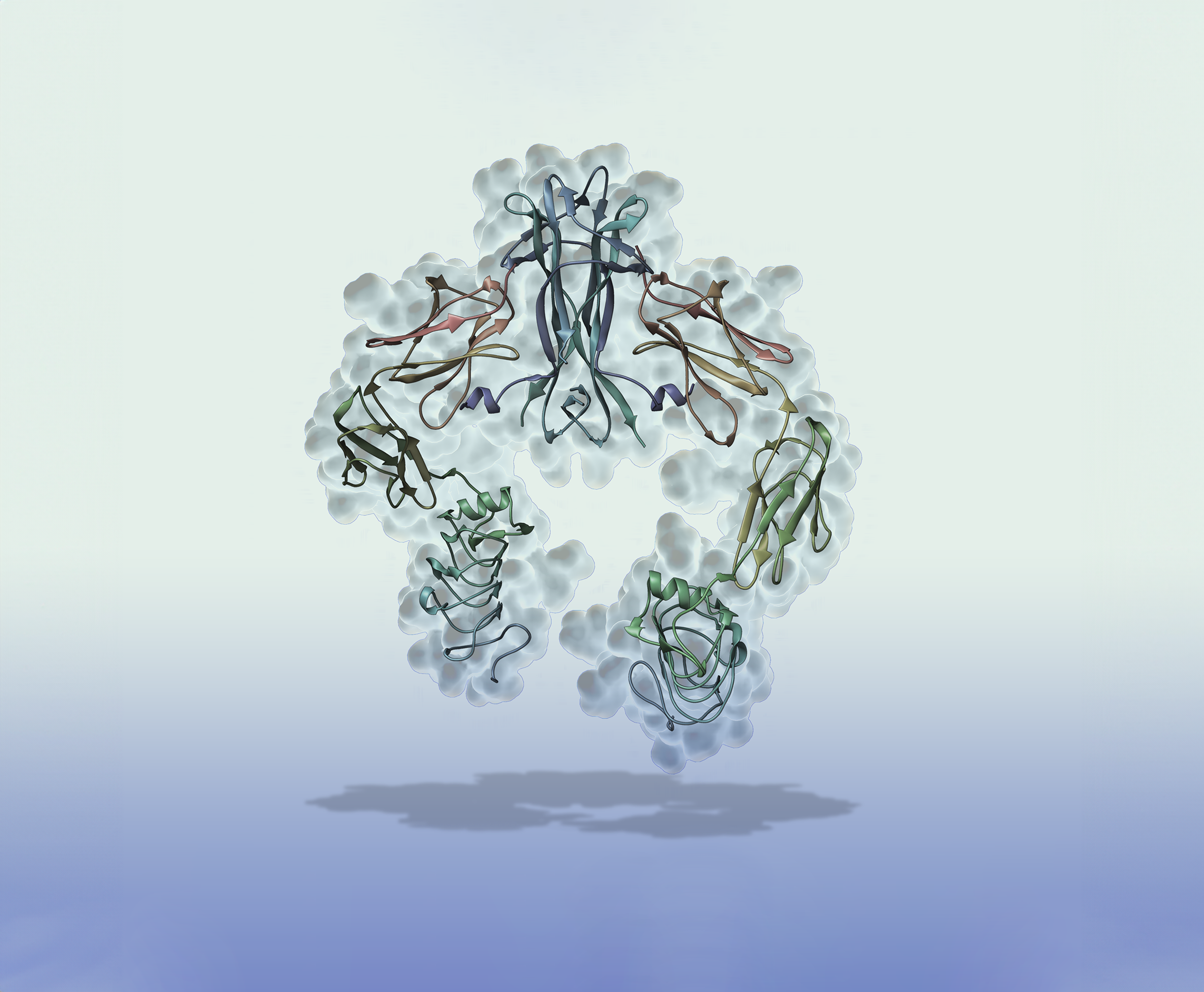

Cenegermin-bkbj, the active ingredient in Oxervate®, is a recombinant form of human NGF (rhNGF). NGF is an endogenous protein involved in the differentiation and maintenance of neurons, which acts through specific high-affinity (i.e., TrkA) and low-affinity (i.e., p75NTR) Nerve Growth Factor receptors in the anterior segment of the eye to support corneal innervation and integrity.

Dompé’s advanced developmental capabilities formulated cenegermin-bkbj into a topical treatment for neurotrophic keratitis that can be delivered via an eye drop.

In clinical trials, the most common adverse reaction was eye pain following instillation which was reported in approximately 16% of patients. Eye pain may arise as corneal healing occurs.

From Innovative Research to an Innovative Production Process

Central to realizing the value of our research has been the industrial-scale biotech production process set up at our L’Aquila manufacturing plant.


Having created the first rhNGF-based drug for the treatment of neurotrophic keratitis, we then had to create a production process that could produce the recombinant protein on an industrial scale. The complex production process of this biotech drug was set up at our L’Aquila production site in Italy, the operational heart of cenegermin-bkbj production.The production process is complex and requires a team of highly skilled technicians and biotechnologists to manufacture cenegermin-bkbj. A key challenge in the process is ensuring that the active ingredient is kept at very low temperatures within specially designed cold stores.

Therefore, we also set up a cold chain to ensure that once produced, the drug is distributed to patients in containers kept at -20°C. We were unwavering in our vision of taking rhNGF protein from bench to bedside as treatment for neurotrophic keratitis, offering an effective treatment for patients who had no FDA-approved, commercially available treatment options. This led to European Medicines Agency (EMA) approval in 2017, U.S. Food and Drug Administration (FDA) approval a year later in 2018, and National Medical Products Administration (NMPA) approval in 2020. FDA granted cenegermin-bkbj ophthalmic solution “Breakthrough Therapy” designation, fast-tracking the review and approval of the drug, recognizing neurotrophic keratitis as a serious condition without FDA-approved drug treatments.

The road ahead

We are currently investigating applications in other ocular diseases. Our success in ophthalmics is only a stepping stone for rhNGF-based applications. We are now exploring potential opportunities to treat other diseases. We have expanded our research efforts into neurotrophins, including manufacturing, formulation, and administration, to better understand their potential for patients. We believe that continuous improvements can evolve into meaningful therapeutic innovations.

Important Safety Information

Warnings and precautions

Use with Contact Lens

Contact lenses should be removed before applying OXERVATE® because the presence of a contact lens (either therapeutic or corrective) could theoretically limit the distribution of cenegermin-bkbj onto the area of the corneal lesion. Lenses may be reinserted 15 minutes after administration.


Eye Discomfort

OXERVATE® may cause mild to moderate eye discomfort such as eye pain during treatment. The patient should be advised to contact their doctor if a more serious eye reaction occurs.

Adverse reactions

Contact lenses should be removed before applying OXERVATE® because the presence of a contact lens (either therapeutic or corrective) could theoretically limit the distribution of cenegermin-bkbj onto the area of the corneal lesion. Lenses may be reinserted 15 minutes after administration.

Use in specific populations

Pregnancy

There are no data from the use of OXERVATE® in pregnant women to inform any drug associated risks.


Lactation

The developmental and health benefits of breastfeeding should be considered, along with the mother’s clinical need for OXERVATE®, and any potential adverse effects on the breastfed infant from OXERVATE®.


Pediatric Use

The safety and effectiveness of OXERVATE® have been established in the pediatric population. Use of OXERVATE® in pediatric patients 2 years of age and older is supported by evidence from adequate and well-controlled trials of OXERVATE® in adults with additional safety data in children.

Indication

OXERVATE® (cenegermin-bkbj) ophthalmic solution 0.002% (20 mcg/mL) is indicated for the treatment of neurotrophic keratitis.

Dosage and administration

Instill one drop of OXERVATE in the affected eye(s), 6 times a day at 2-hour intervals for eight weeks. To report ADVERSE REACTIONS, contact Dompé U.S. Inc. at 1-833-366-7387 or FDA at 1-800-FDA-1088 or https://www.dompe.com/http://www.fda.gov/medwatch.

Pipeline

Life sciences are radically improving the chances of treatment, even for diseases that have yet to find therapeutic answers. Thanks to new knowledge of biotechnology, ever-increasing computing power and the advancement of artificial intelligence, we will be able to respond to patients' needs even faster.

Relevant publications

Human nerve growth factor delivery to the retina: Quantitative methodology and mathematical modeling in preclinical settings

Authors: Simone L Mattioli, Prashant Dogra, Francesco Longobardi, Grazia Casiello, Lucia Apparente, Nicola Detta, Rubina Novelli, Andrea Aramini, Franca Cattani, Maria I Antonangeli, Tiziana Romeo, Marcello Allegretti, Zhihui Wang, Cleide G Machado, Renata Pasqual

Clinical-grade intranasal NGF fuels neurological and metabolic functions of Mecp2-deficient mice

Authors: Diego Pozzer, Marzia Indrigo, Martina Breccia, Elena Florio, Camilla Aurora Franchino, Giuseppina De Rocco, Francesca Maltecca, Antonio Fadda, Marzia Rossato, Andrea Aramini, Marcello Allegretti, Angelisa Frasca, Lidia De Filippis, Nicoletta Landsberger

Cenegermin for the Treatment of Moderate or Severe Neurotrophic Keratopathy: Results from a Prospective, Phase IV, Open-Label Study in China

Authors: Suxia Li, Jianjiang Xu, Jin Yuan, Zhiqiang Pan, Giacomo Siri, Scott G. Hauswirth, Flavio Mantelli & Weiyun Shi

The History of Nerve Growth Factor: From Molecule to Drug

Authors: Elizabeth Gavioli, Flavio Mantelli, Maria Candida Cesta, Marta Sacchetti, Marcello Allegretti

Evaluation of in vitro and in vivo release of recombinant human nerve growth factor from bioengineered human stromal lenticule

Authors: Molly Tzu-Yu Lin, Yu-Chi Liu, Isabelle Xin Yu Lee, Domitilla Mandatori, Nicola Detta, Jing Ying Evelina Han, Letizia Pelusi, Leonardo Mastropasqua, Mario Nubile, Franca Cattani, Tiziana Romeo, Marcello Allegretti, Assunta Pandolfi, Harminder S. Dua, Jodh

Unlock the science behind our mission

Browse Dompé’s research portfolio

Pipeline

With our research and development pipeline, we target some of the highest-needing therapeutic areas.

Exscalate

The discovery of new drug molecules is pivotal to identifying novel therapeutic strategies. But drug discovery is a slow and articulated process with an extremely high failure rate. At Dompé, we have developed the virtual screening platform Exscalate to accelerate the drug screening process.